
The D-Day Landing Beaches, Normandy, 1944, are now inscribed on the UNESCO World Heritage List. This international recognition distinguishes these major memorial sites and once again puts Normandy in the spotlight.
A heritage of universal significance
Listed in 2026 under the criterion of outstanding universal value, the D-Day Landing Beaches constitute a serial property composed of six sites spread over approximately 80 kilometers of the Normandy coastline : Utah Beach, Pointe du Hoc, Omaha Beach, Gold Beach, Juno Beach and Sword Beach.
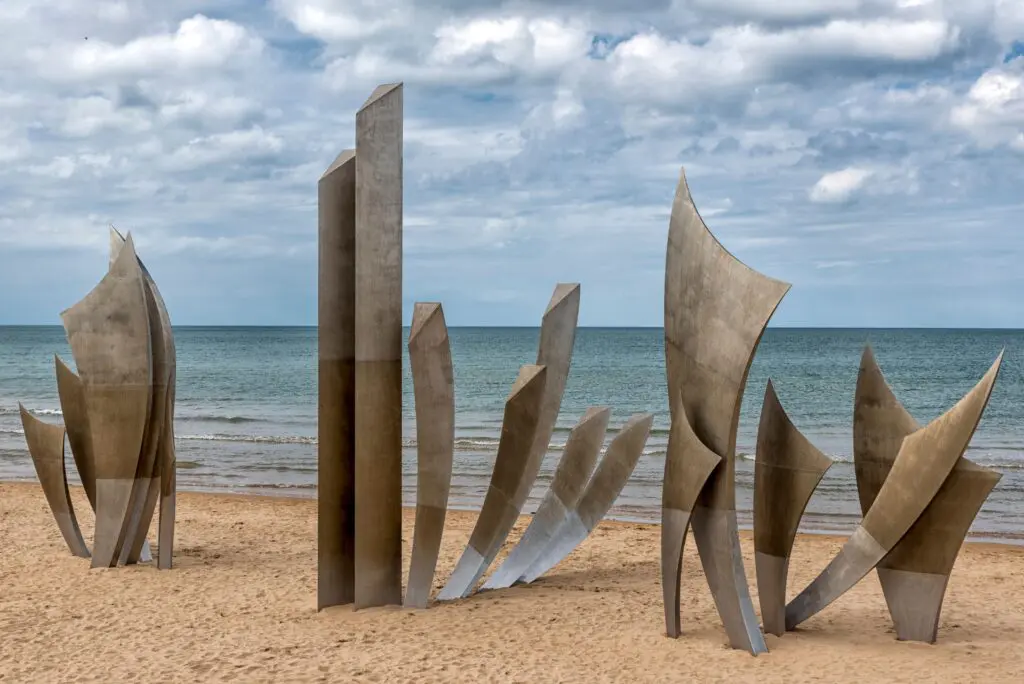
These places are directly associated with the D-Day landings of June 6, 1944 and still retain many traces of this event: remains of the Atlantic Wall, landscapes of remembrance, military equipment and commemorative sites.
This inscription also recognizes the memorial dimension of these places, associated with the history of the Second World War, but also with the values of reconciliation and peace that have developed over time.
This recognition enhances the attractiveness of Normandy
Already renowned for its rich heritage and history, Normandy has seen one of its iconic territories added to the World Heritage List. This international recognition helps to increase the visibility of the D-Day landing sites for both French and international visitors.
Each year, these places attract visitors from all over the world to discover the landscapes, remains and memorial sites linked to June 6, 1944. The UNESCO listing underlines their historical and cultural importance.
A gateway to the D-Day landing sites
Located in the heart of Normandy, the listed sites are accessible from the region's various airport hubs. The Normandy Airports thus contribute to connecting the region with visitors wishing to discover this internationally recognized heritage.